

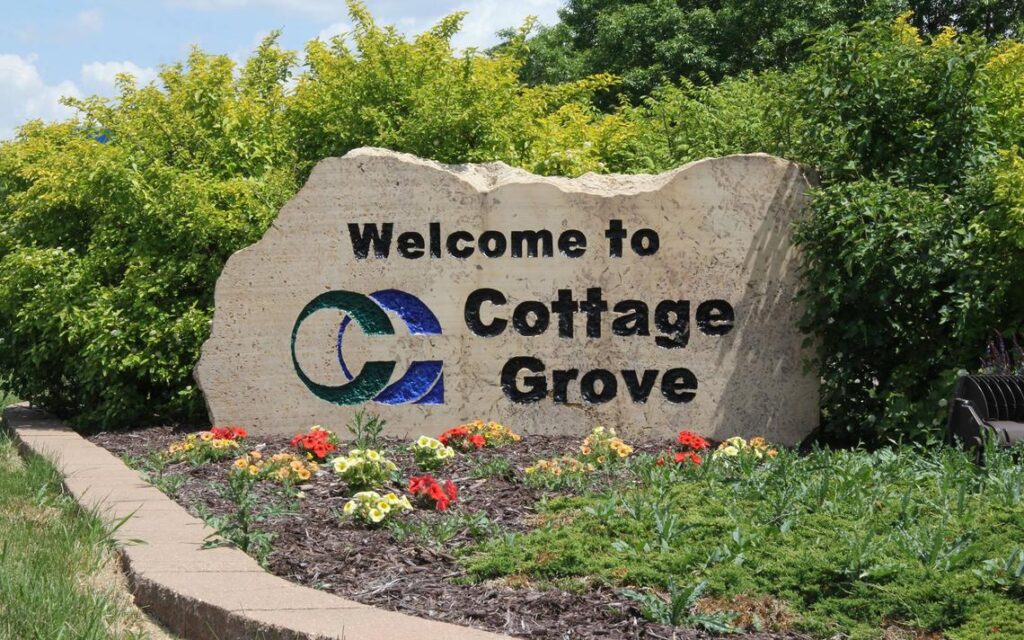
I grew up in Cottage Grove, Minnesota, a suburb of St. Paul, and I am proud of my Minnesotan heritage even though I haven’t lived there permanently in almost 15 years. Like the saying goes, you can take the girl out of Minnesota, but you can’t take the Minnesota out of her.
But my parents still live there and I keep in touch with many of my Cottage Grove FAN club (Elizabeth Shown Mills’ acronym for Friends, Associates, and Neighbors) on social media. I follow the city’s social media pages. An added bonus is that the communications manager for the city is a former classmate of mine!
As I read the papers my dad collects for me, I read about the construction updates that will be taking place this summer. Minnesota has two seasons: winter and road construction.
But why the updates? Sure, to fix the potholes, but mainly to encourage growth, build more houses, bring in more businesses, MORE MORE MORE! It makes me think of a cartoonish evil cackle when I read the article.
But when I have gone back to my hometown, I think “what happened to this place?” This is not the hometown that I have in my head and heart.
My old schools have been added onto, there are houses where there were farm fields, stores are replaced with other businesses, and even more roundabouts!?
Hometowns are living organisms: you need to feed them for them to grow and survive or they shrivel up into ghost towns.
Time doesn’t stand still for someone who wants things to stay the same. People and buildings age, cities need to adapt to the modern ways of life.
And this makes me think of my ancestors who did or wished they could have traveled back to where they left: how would they have reacted to the positive or negative changes?
I think about a few different hometowns and settings when I ask myself this question.
When one set of my great-grandparents moved to St. Paul and raised a family there, the house still remains, but the roads have become busier, there is an electric train system, there are flashing advertising lights and billboards that are computer screens, and cars with subwoofers driving on the main drags that you can hear blocks away.
Then I think about another great-grandmother of mine who grew up in a small town north of Rochester, Minnesota and looking at photographs and picture postcards from the time she was there, it was a bustling town with healthy businesses. Right now, it’s essentially a ghost town. They have a gas station and a restaurant or two, but that’s about it.
So when thinking about location and genealogy, cities and their growth/shrinking is part of the historical and social context of our ancestors’ lives.
Things to keep in mind:
- Maybe your ancestor helped create the town in its earliest stages
- Why did your ancestor move there?
- Maybe your ancestor followed others out who wanted something better
- What was the main factors for creating the town there? What was the town’s industry?
- Was there a conflict within the community between two or more parties that made people leave?
- Maybe your ancestor had a business in the town
- Maybe your ancestor served on the city council or village board
- When looking at the school buildings, are the buildings they attended still standing? Were they razed? Added on to?
- What churches and religious institutions are still standing that were from that time? How much did they change if they are still in existence?
- What historical markers are around that would note significant events, buildings, or people?
- How many cemeteries are there? How old are they?
- How do historic maps of the area line up with modern maps/GPS?
- If I took my ancestor back to their hometown, would they recognize it?
So, can you go home? As I have gotten older, I continue to get excited to cross the state line and be back in the state that my ancestors were in for over a century. I feel connected to the land, the people, and the diverse culture of Minnesota.
But can I go back home? No.
Thankfully, I still carry that in my heart, home, artifacts, and memories.